Word Tower - Premium Puzzle
otto gamesWord
4.7149.00 Reviews
- Version
- 2.6
- Installs
- 10.00K
- Age Rating
- Everyone
Screenshots
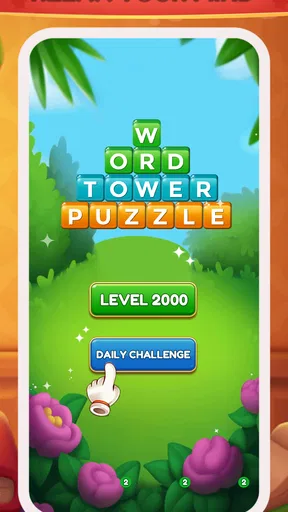
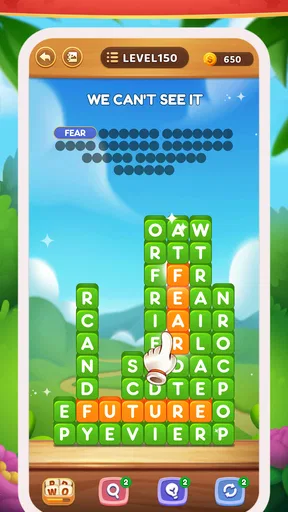
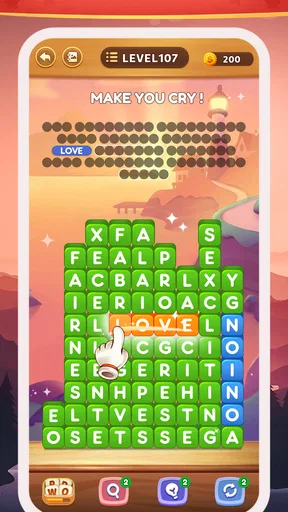
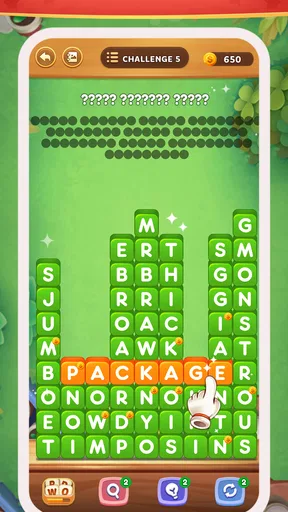
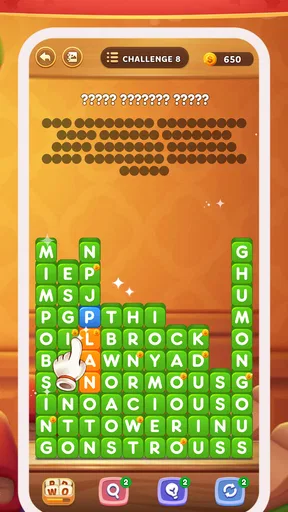
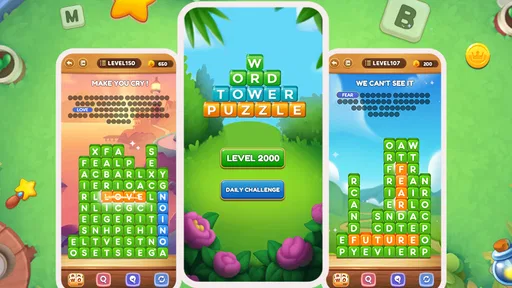
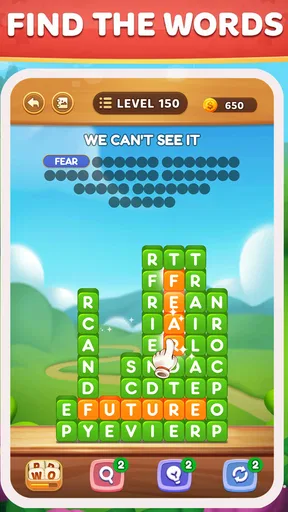
Our Review of Word Tower - Premium Puzzle
 Analysis by Appyee
I went into Word Tower - Premium Puzzle expecting a simple word game, but its appeal is more deliberate than that. It is a focused way to spend a few quiet minutes thinking through letters, patterns, and possible answers, without asking me to learn a complicated rule set first. The game comes from otto games and sits in the word-puzzle category, with a 4.7 average from around 885 ratings. That gives it a reassuring first impression, although a rating alone cannot tell me whether its difficulty curve will suit every player.
The basic attraction is easy to understand: this is a tower-style word challenge built around a large collection of levels. The store describes more than 1,000 stages, so the intended experience is clearly long-term rather than a short one-evening diversion. I like that positioning because word games work best for me when they offer a steady routine. I can play one puzzle while waiting for an appointment, continue for longer when I have time, or return after a break without needing to remember a complicated story.
How the puzzle experience feels over time
I find the lasting appeal less about racing through a tall stack of levels and more about learning how to approach each word calmly. When a familiar pattern does not work, I pause and look for a different route instead of tapping at random; that small change can make a stuck moment feel worthwhile. With that rhythm in mind, it is useful to consider how the game behaves during longer or more frequent play.
A compact game for deliberate thinking
What makes this kind of game effective is not spectacle but the quality of the small decisions. I tend to test the obvious word first, then look at the remaining letters or spaces with a more disciplined eye. When that first idea fails, the useful habit is to stop guessing randomly and instead search for endings, beginnings, repeated patterns, and shorter words that may unlock the rest of the puzzle. That approach is more satisfying than tapping through possibilities, and it is one reason I can see myself returning to the game regularly.
The tower concept also gives progress a visible feeling. Each solved stage represents another step upward, which is a stronger sense of direction than a completely flat list of unrelated puzzles. I would not describe it as a dramatic adventure, but the structure gives small sessions a purpose. Even when I only have enough time for one challenge, I know exactly what I am trying to complete next.
For someone who enjoys crosswords, anagrams, or casual vocabulary tests, the learning curve should feel approachable. The game is rated Everyone, which makes it suitable for a broad audience from a content perspective. That does not mean every puzzle will feel easy. A word game can be perfectly family-friendly while still demanding patience, and I would expect the later climb to punish hurried guesses more than the opening stages do.
Progress can motivate, but it can also create pressure
Long level-based games have a particular strength: they make improvement visible. If I am stuck today, I can leave the puzzle and return with a clearer head rather than treating the session as a failure. That is especially useful with word challenges because a solution often appears after a short break. I recommend using that pause deliberately instead of spending too long repeating the same guesses.
The trade-off is that a large level count can make progress feel like a commitment. Players who prefer a quick daily puzzle with a clear finish may find a tower of stages less relaxing once they start thinking about how far they still have to go. I personally see the long runway as a benefit, but only if I treat it as a collection of small sessions rather than a task that must be completed quickly.
One practical method is to separate solving from experimenting. First, I look for the most certain answer and use it to reduce the possibilities. Then I examine the remaining spaces for word families instead of trying every combination. This makes the game feel more like reasoning and less like a test of patience. It also helps me notice when I am stuck because I lack vocabulary and when I am stuck because I have simply overlooked a familiar pattern.
What the purchase means before you start
The game is listed at $2.99, while optional in-app items are shown in a range from $0.99 to $6.99 per item. That is the most important spending context for a prospective player. I would make the purchase decision based on whether I want a substantial word-puzzle routine, not on the assumption that every part of the experience will be free after installation.
I appreciate that the purchase information is visible enough to consider before playing, but I would still advise checking the payment prompt carefully whenever an optional item appears. The existence of optional items does not by itself tell me how often they are offered, how necessary they are, or whether they affect the normal pace of solving. Those details matter to players who want a completely fixed-cost experience, so I would not promise that the initial price explains every possible spending situation.
For me, the sensible approach is simple: decide on a personal spending limit before opening the game. If I am happy to pay the listed entry price and then ignore optional purchases, I can evaluate the puzzles on their own merits. If I dislike any game that presents extra paid choices during progress, I would be more cautious and read each purchase screen rather than tapping through it automatically.
Fairness depends on how you choose to play
A word game feels fair when the main satisfaction comes from finding the answer rather than paying to bypass the thinking. Since the available purchase information confirms optional items but does not explain their exact role, I would avoid claiming that they are required, harmless, or connected to specific advantages. The honest conclusion is narrower: players should know that extra purchases exist and decide whether that fits their preferred style.
That uncertainty is less of a problem for someone who treats the game as a private puzzle collection. I can take my time, accept a difficult stage, and return later without comparing my progress with anyone else. It becomes more important for a player who wants a purely skill-based experience and feels that any paid assistance could weaken the meaning of a solution. In that situation, I would play conservatively and avoid optional spending until I understood exactly what it changes.
The game does not need a competitive leaderboard to be enjoyable, but the idea of fairness still matters even in solo play. My own rule would be to use a hint or paid aid only when I am genuinely finished exploring the puzzle, not after a few seconds of frustration. That preserves the central reward: recognizing the answer myself. It also prevents the level structure from turning into a sequence of purchases whenever the vocabulary becomes less familiar.
How it compares with familiar word-game alternatives
Compared with a daily word game, this title appears better suited to players who want an ongoing supply of stages instead of one shared challenge that resets on a schedule. A daily format can be more social and easier to fit into a routine, but it also limits the amount I can play in one sitting. The tower approach is more flexible: I can stop after a single puzzle or continue while my attention is still fresh.
Compared with a traditional crossword app, the experience is likely to feel more compact and direct. Crosswords reward broad clue knowledge and patience across a whole grid, while a tower of word puzzles encourages me to concentrate on the immediate arrangement of letters. I would choose the crossword alternative when I want a deeper, slower session; I would choose this game when I want a cleaner sequence of smaller decisions.
It also differs from an endlessly generated word game in an important way. A curated collection of levels can provide a stronger sense of progression, while an infinite system may offer more variety after the initial content is exhausted. The advertised size of this game’s level collection is a clear reason to choose it for structured progress. The trade-off is that I would not assume the experience has unlimited novelty just because it contains a lot of stages.
Who will enjoy it most
I think the best audience is someone who likes vocabulary challenges but does not want a heavy interface, a story campaign, or a multiplayer commitment. It works particularly well for short breaks, quiet evenings, and moments when I want to exercise attention without starting a large game. The Everyone rating also makes it a reasonable candidate for households looking for an accessible word title, provided each player is comfortable with the listed purchase options.
It may also suit players who enjoy building a habit. A useful routine would be to solve a few stages during a commute or after dinner, stopping before tired guesses replace careful reasoning. Because the game has a long progression, there is no need to force a marathon session. In my experience with this style of puzzle, consistency produces more satisfaction than rushing through easy levels and then becoming irritated by a difficult one.
I would skip it if I want a richly animated game, a narrative reason to keep playing, or a highly social competition. I would also hesitate if I only enjoy puzzles with a single daily limit, because the open-ended tower structure may feel less special than a once-a-day ritual. Players who strongly prefer a one-time purchase with no optional items should inspect the purchase flow before committing, since the listed pricing includes additional items as well as the main price.
Device and release context
The current version is 2.6, and the game supports devices running Android 7.0 or later. That makes the compatibility requirement relatively approachable for many Android users, although I would still check the operating-system version on an older phone before downloading. The game was released on December 5, 2021, so it is not a brand-new experiment; it has had time to establish its identity as a focused word title.
Its install figure is over 10,000, which suggests a modest-sized audience rather than the scale of a mass-market mobile hit. I do not see that as a weakness by itself. Smaller games can be exactly what I want when I am looking for a narrow, purposeful experience instead of a huge service with constant distractions. It does mean I would judge the app primarily by the quality and variety of its puzzles, not by popularity alone.
The review volume is around 149 written reviews, so the rating offers useful encouragement but not a complete picture of every long-term experience. I would read individual comments if I had particular concerns about difficulty, purchase prompts, or device behavior. That is especially sensible for a paid word game, where personal expectations about vocabulary and spending can influence opinions more strongly than they would in a free, casual app.
The details I would keep in mind before installing
The first question I would ask is whether the game’s style of challenge matches my vocabulary habits. If I usually enjoy rearranging letters and spotting word patterns, the premise is a natural fit. If I prefer clue-heavy puzzles, visual riddles, or logic grids, the tower format may not provide enough variety on its own. The large collection helps with longevity, but it cannot change the basic kind of thinking the game asks me to do.
The second question concerns spending boundaries. The listed price is clear, but the presence of optional items means I would not hand the phone to a child without explaining how purchases work. The Everyone rating describes the content, not a promise that every family will be comfortable with the payment model. For shared devices, I would use the platform’s purchase protections and make sure the person playing understands that optional items cost real money.
The third question is whether I need offline access, account features, synchronization, or a particular hint system. Those are practical features many players care about, but I would not assume them from the tower structure or from the store summary. If one of those functions is essential to my routine, I would verify it in the app’s own description or settings before relying on the game for travel or multi-device play.
The fourth question is how I respond to being stuck. This is not the right choice for someone who wants every puzzle to resolve instantly. The enjoyment comes partly from sitting with uncertainty and trying a different angle. I would keep a small note of unusual words I encounter, not as a shortcut but as a way to turn difficult stages into vocabulary practice. That makes the harder moments feel productive instead of merely obstructive.
My trust verdict after weighing the trade-offs
My overall view is positive, with a clear condition: I would recommend it to a word-game fan who understands the purchase setup and values a long, structured progression. The combination of a compact puzzle format and more than 1,000 levels gives it a useful role in my library. I can open it for a brief mental reset, yet still have plenty of room to continue when I am in the mood for a longer session.
I would not recommend buying it blindly to someone who expects a completely free experience, a competitive community, or unlimited procedural variety. The listed $2.99 price and optional items from $0.99 to $6.99 make it important to decide in advance how much spending is acceptable. Since the exact function of those items is not explained by the basic purchase facts, I would treat them as optional conveniences to investigate, not as a reason to assume the game is unfair.
What I trust most here is the straightforward identity of the product. It is a word game by otto games, rated Everyone, with a clear tower-based progression and a substantial advertised level collection. The 4.7 average is encouraging, and the existing audience shows that the concept has found appreciative players. Still, my recommendation is based more on the fit between the format and the player than on the rating.
If I were recommending it to a friend, I would say this: choose Word Tower - Premium Puzzle when you want a calm, focused vocabulary challenge with a long path ahead, and approach the optional purchases with a deliberate budget. Its strongest quality is the way it turns small word-solving sessions into steady progress. Its main limitation is that the same structured, repetitive focus will not satisfy players looking for story, social competition, or a constantly changing puzzle system.
For the right player, that focus is exactly the point. I would install it when I wanted something more purposeful than idle tapping but less demanding than a full crossword or strategy game. I would play slowly, leave stubborn stages for later, and judge the experience by how often it makes me want to think rather than how quickly it lets me advance. On those terms, this is a convincing premium word-puzzle option, as long as the spending details and deliberately narrow format fit what I am looking for.
Verdict
Strengths of Word Tower - Premium Puzzle
- Relaxing word puzzles suitable for short or extended play sessions.
- Premium experience with fewer interruptions while solving levels.
- Progressive difficulty keeps the challenge engaging for word-game fans.
- Simple controls make it easy to play on phones and tablets.
- Helpful hints can prevent difficult puzzles from becoming frustrating.
Limitations of Word Tower - Premium Puzzle
- Some puzzles may rely heavily on English vocabulary knowledge.
- Later levels can feel repetitive if you play for long sessions.
- Limited appeal for players who prefer fast-paced or competitive games.
- Hints may reduce the challenge for experienced word puzzle players.
- Premium pricing may not suit users looking for a completely free game.
Other Releases by otto games
View All
Sudoku Master Premium: Offline
Puzzle4.7

Word Search Game: Offline
Word4.6
Similar Picks in This Category
View All
Word Search - Word Puzzle Game
Bluetile4.8

Word Search Quest - Puzzles
Blackout Lab4.8

CodyCross: Crossword Puzzles
Fanatee, Inc.4.7

Words of Wonders: Crossword
Fugo Games4.9

Wordscapes: Word puzzle game
PeopleFun4.7

Word Search Explorer
PlaySimple Games4.9
Frequently Asked Questions
What is Word Tower - Premium Puzzle?
Word Tower - Premium Puzzle is a word game built around forming words from available letters while progressing through tower-like levels. Its premium presentation focuses on a cleaner experience, structured challenges, and a more relaxed style of play than fast-paced arcade word games. It is suitable for players who enjoy vocabulary puzzles, gradual progression, and short sessions that can be played whenever they have time.
How do you play Word Tower - Premium Puzzle?
The main objective is to discover valid words from the letters provided in each puzzle and use them to complete the level. As you advance, the layouts and word combinations become more demanding, encouraging you to look for common words as well as less obvious possibilities. The game is easy to understand at first, but later stages require careful observation, a broad vocabulary, and thoughtful use of any available assistance.
Does Word Tower - Premium Puzzle work offline?
Word Tower - Premium Puzzle is designed to be convenient for casual play, and many of its core puzzles can generally be enjoyed without a constant internet connection. However, certain features may still depend on connectivity, including updates, synchronization, advertising-related services, or platform purchases. If offline access is important to you, it is best to open the game online first and confirm that the required content has downloaded correctly.
Is Word Tower - Premium Puzzle free to download and play?
The availability and pricing of Word Tower - Premium Puzzle can vary depending on whether you download it from Google Play or the Apple App Store, as well as the current regional listing. The word “Premium” may refer to a paid version or to additional content and features. Before installing, check the store page carefully for the purchase price, optional in-app purchases, advertisements, and any subscription information.
Is Word Tower - Premium Puzzle suitable for children and beginners?
The straightforward word-building format makes Word Tower - Premium Puzzle approachable for beginners, especially players who enjoy crossword-style challenges or vocabulary games. Difficulty increases gradually, so younger users may be able to play independently at the start, although some later words can be challenging. Parents should still review the store rating, language requirements, and purchase settings before allowing children to download or use the app.
Play our best games!


